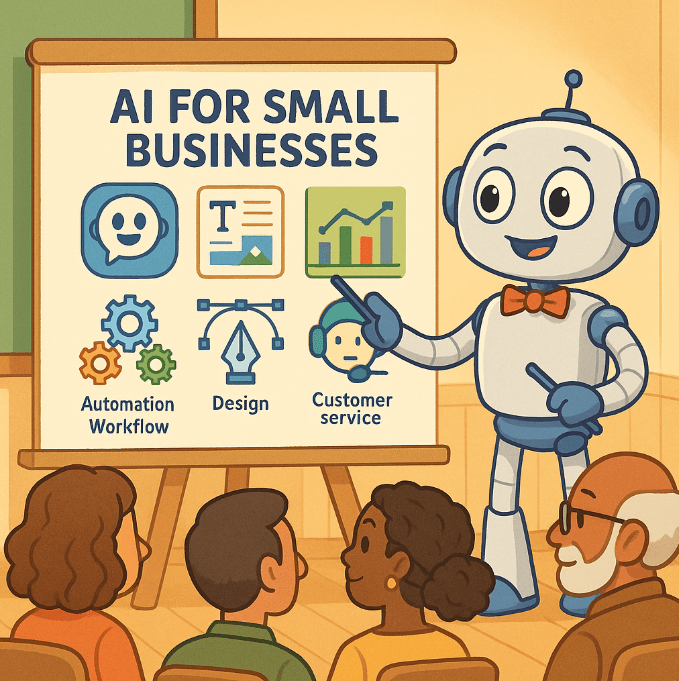
Artificial intelligence (AI) is no longer a concept reserved for tech giants or futuristic movies—it’s a practical tool, reshaping businesses of all sizes. But as AI tools become more accessible and affordable, a new challenge arises: AI literacy. Understanding what AI can (and can’t) do is quickly becoming as crucial as knowing how to balance a budget or market your services. Whether you’re running a local bakery, a consulting firm, or an online store, AI literacy can significantly impact how—and even if—you decide to implement AI in your business.
What Is AI Literacy?
AI literacy means having a basic understanding of how AI works, its capabilities, limitations, and ethical considerations. It’s not about writing code or developing complex algorithms, but about being able to make informed decisions about when and how to use AI in your business operations.
How AI Literacy Impacts Business Decisions
1. Identifying Real Business Needs
Without AI literacy, it’s easy to get caught up in the hype. Some business owners might adopt AI tools just because competitors are doing so, or because they’ve heard AI will “revolutionize” their industry. However, understanding AI helps you identify real business pain points that AI can solve, rather than chasing trends without clear benefits.
2. Choosing the Right Tools
There is a dizzying array of AI products available for small businesses—from chatbots to automated marketing platforms. AI literacy empowers you to ask the right questions:
- Does this tool integrate with my existing systems?
- What data does it require, and do I have it?
- Will it really save time or money, or just add complexity?
3. Managing Risks and Expectations
AI is powerful, but it’s not magic. Understanding its limitations helps you set realistic expectations and avoid costly mistakes. For example, expecting an AI tool to perfectly handle all customer inquiries without human oversight can lead to frustrated customers. Being AI-literate means you’re aware of these pitfalls and can plan accordingly.
4. Encouraging Team Collaboration
When your team understands the basics of AI, they’re more likely to embrace new tools and suggest creative ways to use them. This leads to smoother implementation and better results. A team that fears or misunderstands AI, on the other hand, may resist adoption or misuse the technology.
5. Ensuring Ethical and Legal Compliance
AI can introduce ethical dilemmas and legal risks, from privacy concerns to algorithmic bias. AI-literacy helps business owners navigate these issues, ensuring that any AI implementation aligns with regulations and core company values.
Should You Implement AI? AI Literacy Guides the Answer
AI isn’t a one-size-fits-all solution. Sometimes, the best decision might be not to implement AI—at least, not yet. AI literacy gives you the confidence to:
- Assess if your business is ready for AI (Do you have enough data? Is your team prepared?)
- Calculate the return on investment (Will the tool pay off in time, cost, or quality improvements?)
- Start small and scale wisely (Pilot a chatbot for customer service before automating everything)
How to Build AI Literacy in Your Organization
- Invest in training: Online courses, webinars, and workshops can bring everyone up to speed.
- Encourage experimentation: Let teams try out AI tools in non-critical areas to gain hands-on experience.
- Stay informed: Follow reputable sources for the latest AI news, trends, and case studies.
Conclusion: AI Literacy is a Competitive Advantage
AI literacy is not just for IT staff—it’s for everyone. It empowers you to make smarter decisions, maximize the benefits of new tools, and avoid common pitfalls. As AI continues to shape the business world, those who understand it will be best positioned to lead, adapt, and thrive.
Ready to take the next step? Start by learning the basics of AI, involve your team, and make AI literacy a foundational part of your business strategy. The future belongs to those who are prepared!
References
 AI Catalyst
Leave a comment