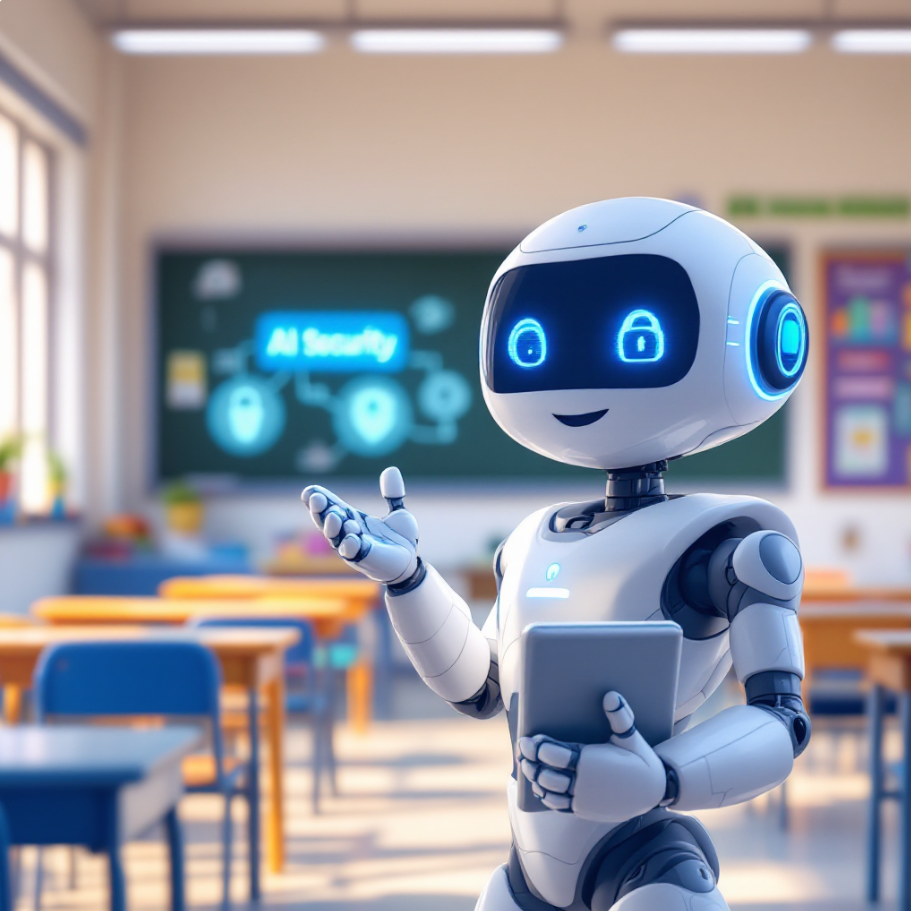
Artificial Intelligence has become an integral part of our daily lives, transforming how we work, communicate, and interact with technology. From smartphones to social media, healthcare to finance, AI’s influence is pervasive and growing. I was having a conversation with someone the other day and we were discussing “AI Safety”, not necessarily discussing this topic at the level of a cybersecurity analyst, but more so at the “everyday user” level. How do we train or inform our employees, friends or our families on how to be safe in this new world of AI? It’s crucial to ensure that we, our employees, friends, and families are equipped with the knowledge to navigate this new landscape safely and responsibly.
For the sake of this article we will simply call it “AI security for the masses”.
Understanding AI’s Reach
Before diving into safety measures, it’s important to grasp the extent of AI’s applications in our everyday lives. AI powers the digital assistants on our smartphones, curates our social media feeds, recommends content on streaming platforms, and even helps optimize our commutes through ride-sharing apps. In various industries, AI is revolutionizing processes and decision-making:
- In healthcare, AI improves diagnostics and personalizes treatment plans.
- Financial institutions use AI for fraud detection and risk management.
- Retailers employ AI for inventory management and personalized shopping experiences.
- The education sector utilizes AI to create tailored learning experiences.
With such widespread integration, the need for AI safety education becomes paramount.
The Importance of AI Safety Education
AI safety education is not just about protecting ourselves from potential risks; it’s about empowering individuals to harness the benefits of AI responsibly. The risks associated with AI technologies include privacy concerns, bias and discrimination, cybersecurity threats, and the potential for job displacement. By educating ourselves and others, we can mitigate these risks and foster a culture of responsible AI use.
Strategies for AI Safety Education
1. Start with the Basics
Begin by explaining AI in simple terms, using relatable examples and metaphors. For instance, you could compare machine learning to teaching a child to recognize objects by showing them multiple examples. Or try explaining prompt engineering by giving examples of how you ask questions. You will normally get better results when asking your friend, “how did your presentation on the 7 Wonders of the World go at school last week”, rather than asking “how did that thing you did go”. Prompting is just a different way of saying asking, and the more concise and articulate your question is the better the result will be.
2. Utilize Interactive Training Programs
Many organizations offer interactive courses on AI safety. For example, Traliant provides a 30-minute course on “AI in the Workplace: Acceptable Use of Generative AI Tools”. These programs cover the risks and benefits of using AI, emphasizing the importance of checking AI outputs for accuracy, quality, and bias.
3. Courses for Non-Technical Users
While not exclusively focused on AI security, these courses provide a foundation for understanding AI concepts, which is crucial for grasping security implications:
- AI For Non-Technical People: A Hands-On Beginner’s Course: This course offers a comprehensive introduction to AI for non-technical individuals, covering AI basics, applications, and ethical considerations.
- AI for Everyone: Offered by DeepLearning.AI, this course is designed for non-technical professionals and provides a broad understanding of AI, including its implications and ethical considerations.
- Introduction to Artificial Intelligence: This LinkedIn Learning course is aimed at non-engineers and provides a high-level introduction to AI tools and concepts, helping learners understand AI’s potential and limitations.
- Ethics of AI: Offered by the London School of Economics, this course explores the ethical implications of AI, including privacy and bias, which are key components of AI security.
4. Leverage Existing Resources
There are many resources available for different age groups and contexts:
- For families, Internet Matters offers guides on using AI safely, particularly focusing on children’s digital wellbeing.
- For employees, especially in high-risk environments, AI-driven safety solutions can provide comprehensive protection.
- Government employees can benefit from specific training programs designed to ensure proficiency in AI tools and technologies.
5. Encourage Hands-On Experience
Provide opportunities for individuals to interact with AI tools in a controlled environment. This could involve using AI-powered writing assistants or image generators under supervision, allowing people to understand both the capabilities and limitations of AI.
6. Address Ethical Considerations
Incorporate discussions on AI ethics into your training. This includes topics such as data privacy, algorithmic bias, and the importance of human oversight in AI decision-making.
7. Stay Updated
AI technology is rapidly evolving. Encourage continuous learning by sharing updates on AI developments and their implications for safety and privacy.
8. Tailor the Approach
Customize your AI safety education approach based on your audience. What works for tech-savvy teenagers might not be suitable for older adults or young children. Adapt your language, examples, and level of technical detail accordingly.
9. Promote Critical Thinking!
Teach individuals to question and verify AI-generated content. This skill is crucial in an era where AI can create convincing but potentially misleading information.
Implementing AI Safety Education
For Employees:
- Integrate AI safety into existing cybersecurity and digital literacy training programs.
- Conduct regular workshops and seminars on AI developments and their implications for the workplace.
- Provide clear guidelines on the acceptable use of AI tools in professional settings.
For Friends and Family:
- Share informative articles and videos on AI safety through social media or messaging apps.
- Organize informal discussion groups or “tech talks” to explore AI topics together.
- Encourage the use of AI-powered educational tools to learn about AI itself, making the process engaging and interactive.
For Children:
- Use age-appropriate explanations and examples to introduce AI concepts.
- Supervise their interactions with AI-powered devices and applications.
- Teach them to critically evaluate information and content, whether AI-generated or not.
As AI continues to shape our world, education on its safe and responsible use becomes increasingly vital. By implementing these strategies and leveraging available resources, we can empower our employees, friends, and families to navigate the AI landscape confidently and securely.
Remember, the goal is not to fear AI, but to understand it, use it wisely, and harness its potential to improve our lives while being mindful of its limitations and risks.
References
- “AI Applications in Daily Life and Various Industries”
- “Common AI Interactions in Daily Life”
- “Day-to-Day AI Uses”
- “Industry-Wide AI Integration”
- “Major Industry Use Cases for AI”
- “Innovative Industry Applications of AI”
- “Real-World Industry Examples of AI Applications”
- “Global AI Ethics and Governance Observatory”
- “AI Ethics Council”
- “Worldwide AI Ethics: A Review of 200 Guidelines”
- “AI Ethics and Governance in Practice”
- “AI Governance in Practice Report 2024”
- “The AI Governance Challenge”
- “AI in Schools: Pros and Cons”
- “The Role of AI in Modern Education”
- “Can AI Transform Education to Ensure All Students Benefit?”
- “AI is Coming to Schools, and if We’re Not Careful, So Will Its …”
- “Embracing AI in Education”
- “AI Will Transform Teaching and Learning. Let’s Get it Right.”
- “Artificial Intelligence and the Future of Teaching and …”
- “The Ultimate Guide to AI in Education”
- “AI Safety Fundamentals (AISF): Alignment & Governance” Link: https://www.aisafety.com/courses
- “AI Safety Fundamentals Course” Link: https://aisafety.info/questions/8264/What-training-programs-and-courses-are-available-for-AI-safety
- “AI Safety Camp (AISC)” Link: https://www.aisafety.camp/
- “SERI ML Alignment Theory Scholars Program (SERI MATS)” Link: https://aisafety.info/questions/8264/What-training-programs-and-courses-are-available-for-AI-safety
- “Safety and Control for Artificial General Intelligence” Link: https://aisafety.info/questions/8264/What-training-programs-and-courses-are-available-for-AI-safety
- “Certified AI Safety Officer (CASO) from Tonex, Inc.”
- “Need Guidance on How to Avoid AI Pitfalls? New Resources Aim to Help Schools” Link: https://www.edweek.org/technology/need-guidance-on-how-to-avoid-ai-pitfalls-new-resources-aim-to-help-schools/2024/11
- “Principles | AI Guidance for Schools Toolkit | TeachAI” Link: https://www.teachai.org/toolkit-principles
- “ChatGPT and Beyond: How to Handle AI in Schools | Common Sense Education” Link: https://www.commonsense.org/education/articles/chatgpt-and-beyond-how-to-handle-ai-in-schools
- “Embracing Artificial Intelligence in the Classroom” Link: https://www.gse.harvard.edu/ideas/usable-knowledge/23/07/embracing-artificial-intelligence-classroom
- “Navigating Responsible AI in Education – ACSA Resource Hub”
 AI Catalyst
Leave a comment